
Swarm Season
On the miraculous birth of bees

Swarm Signals
It’s swarm season here in Baltimore. A time for the manic cowboy thrills of beekeeping that lead people like me into a total obsession with honeybees. All winter, we sit around with fingers crossed that our hives are insulated, populated, and fed enough to survive the coldest days. When temperatures rise, we watch for a few intrepid bees stumbling out to forage for water and early nectar. They alight on snowdrops and hellebores and our spirits lift. We do our first inspections, assess health, and proclaim a new season has begun. The hive count and season count resets. In March, I could declare this as my third season of beekeeping and report that two out of two hives successfully overwintered.
During my second year of beekeeping, I stumbled into a Signal group for guerrilla fig farmers and introduced myself as a beekeeper. It turned out, two others in that group kept bees and wanted to chat about it. Our tiny cluster of beekeepers spun out of the fig chat and into our own group dedicated to bees. By the end of the season, we’d invited other new and seasoned local beekeepers, and our ranks grew to a dozen people on the chat.
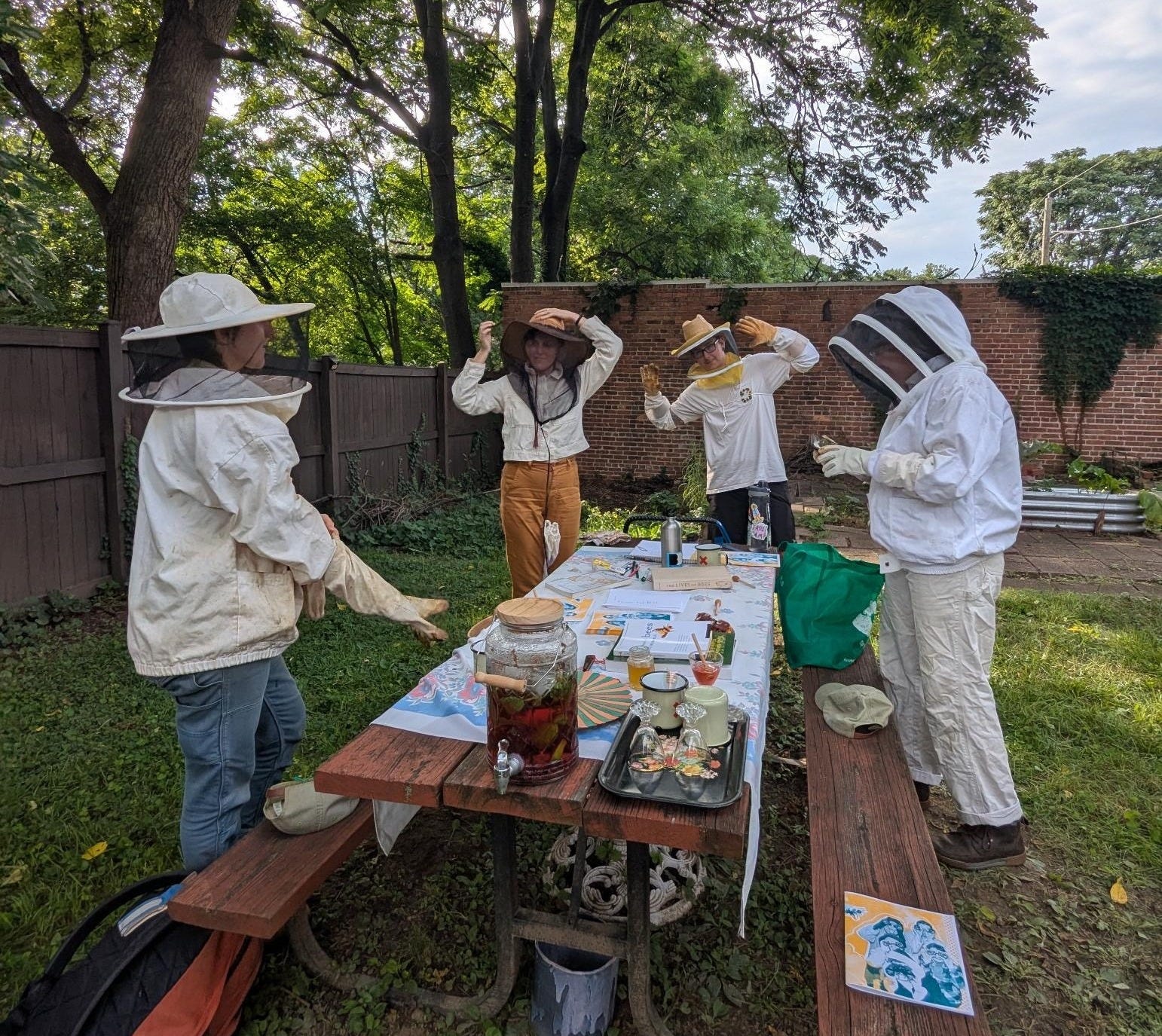
The added layers of encryption give it the feel of an underground insurgent group of anti-establishment beekeeping. It’s full of wood workers and tool librarians, acupuncturists and farmers. People who have caught wild bees in their own backyard, and eventually quit their corporate job to focus on bees and farmers markets and neighborhood businesses they can nourish within an e-bike distance from their home. People who build their own hives.
Recently, the story of a woman showing up to a friend’s eviction and releasing bees in a tussle with police made national news. A member of the Signal group shared the story without need for additional comment. We replied in emojis and filed it away as a strategy to deploy if ever a situation requires bee justice.
All spring, the beekeeping Signal chat has been ramping up. First, with people borrowing protective gear to move beehives from one spot to the next. Then exchanging advice on splits and treatments. And in the last week, as the weather has become more consistently warm, the list is absolutely alive with talk of swarms.
It’s swarm season, y’all. And I too quit my job for this.
May Day
On the last day of April, I got a text from the land steward of the Baltimore Waldorf School that the top bar hive I tend on their campus had swarmed, again. It had made a break for it the day before, just before a massive rain storm. Landed in a tall oak tree, caught a whiff of the impending rain, and changed its mind.
Today, the weather had cleared and the forecast looked sunny for the next several days. The bees decided to make another go of it. This time, landing in a small tree, clustered about twelve feet off the ground above the Waldorf playground. A class of students stood mesmerized as the hive spewed a cloud of bees into the air and gradually clustered into a clump above their heads. One student declared it was the best nature studies class they’ve ever had. They stood and witnessed a miracle. What could be better?
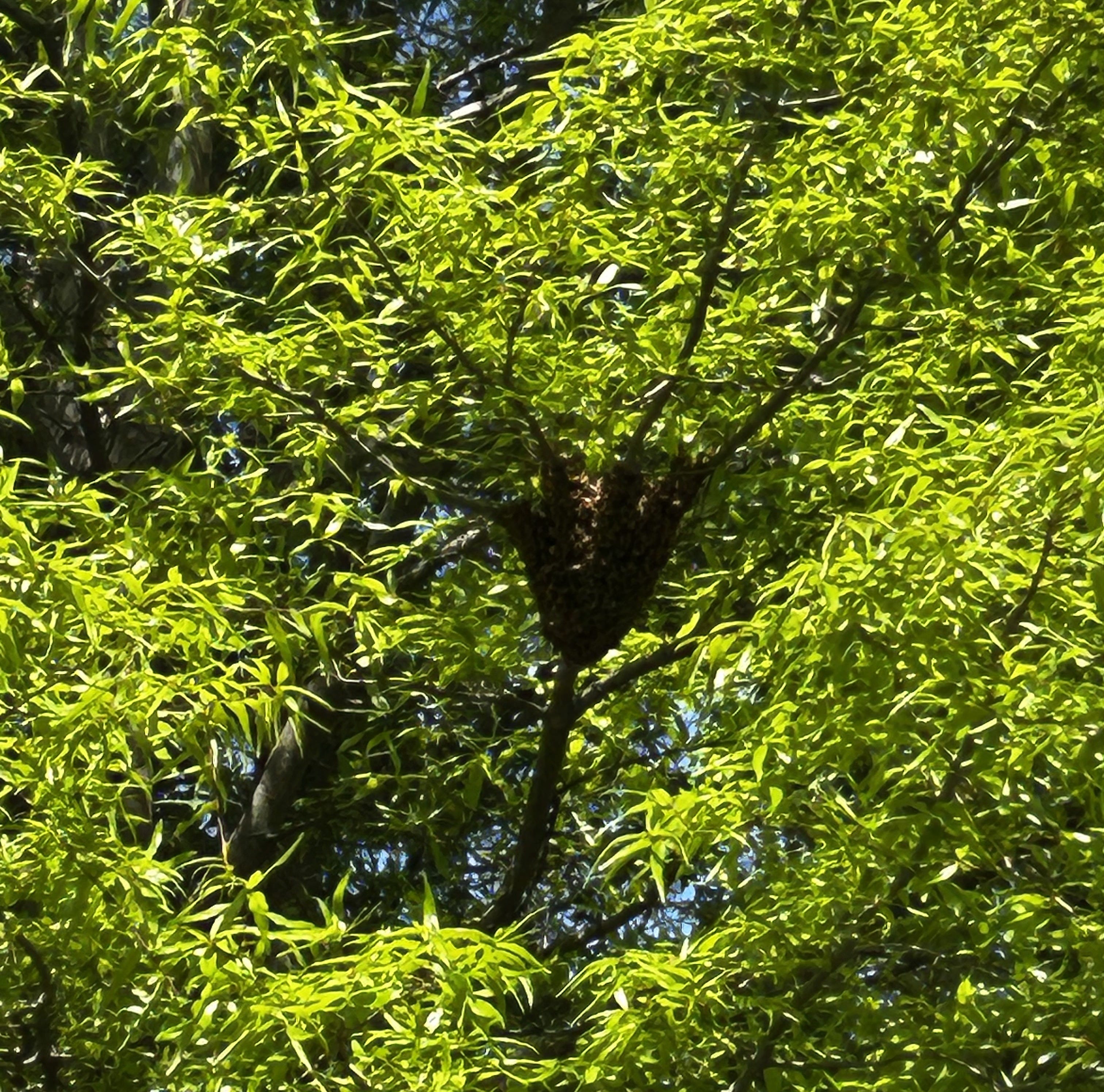
For Eliza who guides students learning on the land, her awe was tempered by wondering how long this swarm of bees would hang out and whether it would be gone by the time their school-wide May Day celebrations were underway the following morning. Months of preparation envisioned this very spot as the location for May pole dances, the annual crowning of their May Queens, and the family picnics to follow. Sure, the bees could be seen as a spring blessing for the occasion, but was this really the best timing?
I wondered the same thing. After months of wincing at the clunking sound coming from my front tires every time I parallel parked, I decided I needed to get my car checked out before hitting the road again that weekend. I dropped it off first thing in the morning— fully loaded with the equipment I would normally use to catch a swarm. The Waldorf School is a small drive from my house. Plus, I had a grant deadline looming over me and plenty of writing to do. Honeybees have such little regard for due dates and plans.
Just as I was writing to Eliza to request photos and texting with another beekeeper from our Signal group to plot out methods for getting bee swarms out of a tall tree, another text came in.
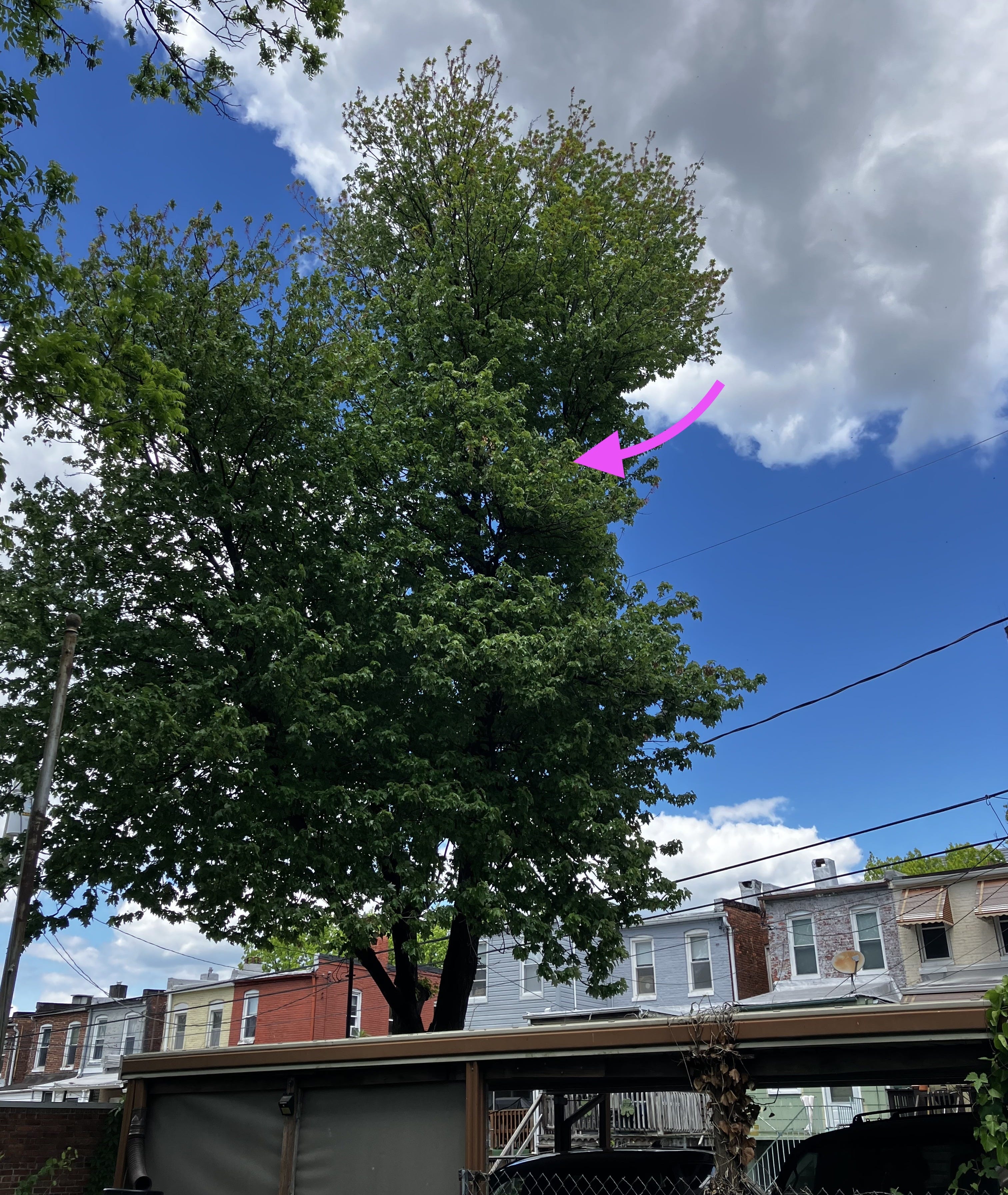
The hive I keep just down the street from my house had just begun to swarm. The woman who shares her garden with me and my bees sat in her second story office and watched a cloud of bees gather on a branch just above eye level of her second floor. Every cell in my body surged with the drive to go catch these swarms. I decided to stop agonizing over grant details, submitted the request, suited up, and headed down the street to have a look.
This is the time of year that being a beekeeper feels like being a volunteer fire fighter for extremely small fires. You don’t get to choose what’s happening or where. You just need to be on call and assess whether you are prepared to spring into action.
I stood under the black walnut tree that towers over my neighborhood hive, focused the binoculars Amy handed to me, and did my best to find the cluster of bees that had settled fifty feet off the ground. I looked at the sturdiness and placement of the aluminum carport, the height of the walnut tree branches, and the length of the extension pole I snagged from my house. No strategy seemed particularly promising. I wired a chunk of bee tree wood onto the end of the pole and saw it barely reached to the lowest branches. I desperately rubbed beeswax onto an old bird feeder and swapped out the heavy log for a lighter form of bait. Nothing could make my reach any longer. No amount of standing in the yard and squinting up at the swarm could coax it to come down.
I met a friend for coffee and struggled to stay present. No matter where our conversation wandered, my mind fixated on two clusters of bees that had swarmed out of my hives on the same day at the same time, and my total inability to reach them. By the time we wrapped, I resolved to drag my husband Andy up to the Waldorf School, along with whatever bee equipment I could scrounge up.
The Mother Queen
A handful of kids played on the wooden playground nearby. A handful of faculty milled about near the school building. A tall ladder leaned up against the black metal fence. And a cluster of bees calmly shimmied above our heads. Bees flying in and out.
During the winter months, the Queen ceases laying eggs and rides out the cold months in a cluster of bees shimmying to stay warm. Once the weather turns, honeybees prepare for spring and the Queen begins laying weeks before you see trees blossoming or put away your winter jacket. She makes a bet each year to build up the population in the hive before there is much to eat in the landscape. When spring cooperates, the nectar and pollen show up just as young bees become ready to fly out and gather it. Space inside the hive becomes scarce and the bees need room to expand.
In conventional beekeeping, much effort and equipment is dedicated to prevent hives from swarming. A commercial operation wants to keep as many bees as possible and dedicate bee energy towards making honey early and abundantly. When your livelihood depends on honey harvests, losing half your bees could present a setback or distract bees from dedicating all of their attention to foraging.
In regenerative beekeeping, swarms are regarded as part of the honeybees’ natural reproductive cycle. The mother Queen creates daughter Queen cells, determines the colony can make it without her, and flies into the world in a cloud of older bees to find a new home. Flying out renews her reproductive capacity. Finding a new place to nest gives the colony a fresh start. It’s risky business to give up the safety of a known residence, but the bees have evolved a sophisticated process to find their new home1.
In the wild, honeybees nest in open tree cavities. A swarm sends out scouts to assess nearby options. Each one who finds a promising nesting site comes back to the cluster and performs a waggle dance to indicate the location and quality of the site. A more enthusiastic dancer is saying she’s onto something good, which signals additional scouts to have a look. Over time, consensus builds across the bees. Swarms with several options can be observed “changing their mind”. Enthusiasm for nesting sites shifts as groups of bees go out to make their own assessment and attempt to sway the colony. This process can take hours or days.

A swarm catching beekeeper like me steps in to make them a sweet offer—a warm, dry, nearby housing option with curb appeal for bees. Driven by a sense of smell and purpose, honeybees will accept a wooden hive that signals the scents of home.
I built a small top bar hive for just this purpose and have been storing old comb and beeswax in it all winter to increase its allure. As I prepared to climb the twelve foot ladder and shake the cluster of bees into a box, I placed the wooden hive on a white tablecloth on the ground and made a ramp to its entrance with the lid. The bees naturally march upwards when moving in.
Irrationally, I’m more afraid of tall ladders than swarms of bees. I know from experience that this is among their calmest states of being. They take a honey meal before leaving the hive, and have nothing to defend. Vulnerable to the elements, a swarm of bees is docile and sweet. Experienced beekeepers will plunge an ungloved hand right into the center of a swarm to feel its warmth and never get a single sting. I still keep my gloves on.
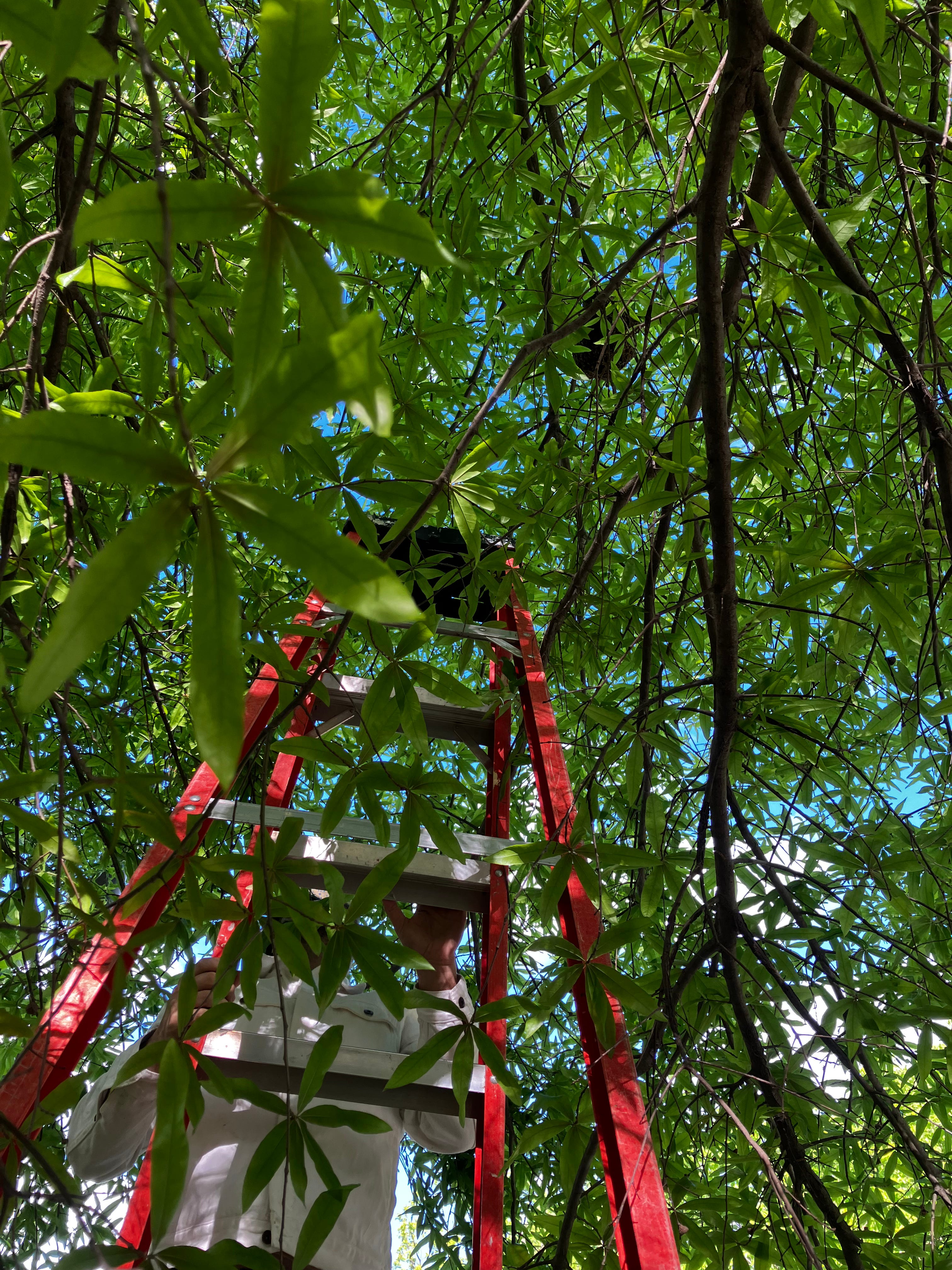
At the top of the ladder, I stood there mesmerized. On eye level with the cluster. Watching scout bees on the surface shaking their abdomens to communicate to their sisters. In one hand, I held a corrugated plastic box—mercifully light for carrying up ladder rungs and managing with a single arm. I positioned the box carefully under the cluster and gave the branch an assertive shake. The box felt heavy with bees, assuring me of some success. I made my way back down and poured them out onto the white cloth. This would help me search for the mother Queen.
I found her with relative ease. Sauntering as she does with her long abdomen amidst a small entourage of her attendants. With a metal queen clip, I gently secured her in my hand and attached the clip with rubber bands to one of the top bars of the wooden hive. Nothing motivates bees more quickly than their queen, who was now suspended securely inside the hive. The bees began to march in.
As we sat watching the colony’s growing enthusiasm for this new destination, staff and faculty from the school tip-toed up to sneak a peak and take photos of the operation. Catching swarms is high drama and always worthy of a crowd.
One woman I hadn’t met yet gently eased her way over just as the bees were settling into a steady forward march. As she inched closer, we chatted about honeybees and native bees; the phenomenon of swarming; and the lessons of keeping bees so close to kids. I inquired about May Day celebrations and how the event will go. We were honored to learn that we were in the presence of the May Queen herself. Pat serves as head of school and was the person who brought this top bar hive onto campus nearly a decade ago. She came out of retirement to help the school through leadership transitions this year, and would be honored as Queen the next day.
We were surrounded by Queens with the power to set things in motion. A perfect way to close out this momentous occasion. The sun began to set. The bees filed into the hive. We wrapped the tablecloth around it, loaded everything into the back of Andy’s truck, and drove to my home garden to let them rest for the night.
Tomorrow, I would do another round of convincing. For today, I had one swarm settling into a hive just below my swarm in the tree. This victory was enough to settle my soul and celebrate the day.
A Treasured Teacher
The following morning, I felt elated to see the newly installed bees making orientation flights in front of the small hive.
Incredibly, a Verizon truck with an extendable arm for installing fiber optic cables was parked directly in front of the bee yard. Had I manifested the answer to my capturing my second swarm? Could I convince this man to let me ride up in the bucket on his truck? If I was nervous on a twelve foot ladder, was I really ready to upgrade and repeat the operation two or three times higher up?
The driver apologized for parking there, asked me if he needed to move, and expressed amazement that he’d been working there for hours and never noticed any bees. He follows an Instagram account of a beekeeper who removes “killer bees” that attack aggressively, which may have influenced his impression of what it’s like to be so close to honeybees. My calm bees barely registered.
I pointed out the swarm way up in the branches, and half-joked about his truck being the answers to my prayers. He said even their equipment couldn’t reach that high up, which let me off the hook for making a serious attempt. When he rode up to attach a wire on the nearby telephone poll, he got close to the swarm and expressed total delight at what he saw. “That whole thing is bees?” “Yep. Pretty amazing right?” “Amazing”. This was the first time he’d seen such a mass of bees up close. He snapped some photos from up high in the bucket to share with family and friends. I accepted this PR win as the most I could accomplish with my tree swarm, and accepted that they would have to find a home on their own. One bee rescue would have to suffice.
I observed the caught swarm coming and going from its new hive, and debated whether to let them settle in or move them to the newly built full-sized hive I’d placed in the yard. With plans to travel out of town, it seemed better to make the move and give them a chance to adopt this more permanent home right away.
When I lifted up the top bar adjacent to the queen clip attachment, an entire curtain of bees lifted up with it. To release the queen, I would have to disturb their temporary home anyway. I might as well make the full move.
I moved each bar over, released the queen, and arranged objects on top of the hive like an altar to help bees orient by sight and smell. Despite being just a few feet away, I knew the foraging bees would come back to the place they’d settled the night before.
They adopted the new hive quickly, responding to the beeswax disc, terra cotta water dish, and bleached out oyster shell as guides. Just months after completing the build on this new hive, it was finally alive with bees.
Just like that, I am in my third season and now have three hives.
Being increasingly in tune with bees has aligned my awareness to the weather, warmth, and cycles of spring. On cold days, I’ve been in a terrible mood. Sulking inside, waiting for temperatures to cooperate and invite me outside to soak in the sun. I lament the frosty mornings that knock out cherry blossom blooms. And my attitude elevates as trees leaf out and bees begin to expand.
Spring becomes a time of verdant abundance.
Those days of abundance come fast and furious. They remind me that it’s doable to build something out of nothing. That cooperation can create new life and new possibilities. That we are able to shift our priorities to allow for happy surprises. And that we may find ourselves in the company of queens and mothers and magic.
Swarm season has become a treasured teacher.
Births Upon Births
In addition to the action packed days of swarm catching, this season has felt full of births upon births and new beginnings.
Just this week, a colleague caught his own baby as his wife delivered in the backseat of their car, parked outside the hospital, surrounded by cops, and eventually their late-to-the-game obstetrician. Isn’t that just for movies?
A community art space pondered its future as an art collective, and began dreaming up ways for local artists to take the lead.
An urban wood lot got an unexpected delivery of bees who had established residence in a hollowed out tree. Over several hours, we determined their best bet was to stay in the tree cavity they arrived in. So began an experiment in stabilizing wild bees.
A friend who dreamed of building a dock and keeping bees at their communally-owned farm realized both wishes in one weekend. A dozen people and thousands of bees travelled from Baltimore to Pennsylvania. We cooked communal meals, built the dock, tended fires, and installed a split of bees into her newly built hive.
An essay I wrote on hyperlocal honey made its way to print! We drove up to Brooklyn to celebrate the launch of this sweet little zine created by a local tea company; and nabbed ourselves a copy.

I got a chance to meet face to face at the event with a new friend I met through an online book proposal class. She and I spent four weeks in April turning vague book dreams into decent book concepts with marketing plans and chapters and the whole nine yards. WILD.
And I’m preparing to deliver my first wedding blessing on behalf of the bees. It’s a sacred honor to have been asked. Roughly six drafts sit next to my typewriter. A final version is within reach. This weekend, I may rehearse in front of the hives.
My life feels transformed since this time last year. I’m grateful for more freedom in my days. Energized by more beekeepers in my circle. And learning volumes through projects big and small.
I am metabolizing lessons from the bees and gradually getting ideas into the world to enjoy the “lovely, flowering landscape”.
Beekeeping has brought me closer to the miraculous cycles of life and invited me into new roles in my own community and the natural world. Swarm season reminds me that life makes bets on itself and expands out of view before it bursts into the world with dramatic flair. That change can be risky and sudden and sweet all at once. That it helps to travel in good company to guide you home.
I’m getting oriented to new worlds, new bees, and new futures.
Wow! That swarm in the tall tree...!! Simply amazing and congrats on getting your hyperlocal honey essay in print. I will have to visit that tea shop next time I am in Brooklyn 💗