
How We Learn
A meditation on how we learn, why we learn, and the meaning we make along the way.

That Which Gives You Balance
My personal journey into beekeeping has shed light on the act of learning itself—the how, the why, and everything in between.
Curiosity grabbed hold in 2018 when I wandered into an opportunity to observe bees and their beekeeper in action. To ask about the when, why, and how. To peer into the inner workings of the hive. To talk about forage, seasons, lineage, spirituality, leadership, and non-human teachers. To commune with bees on sacred land and connect with a spiritual mentor who encouraged me on my path.
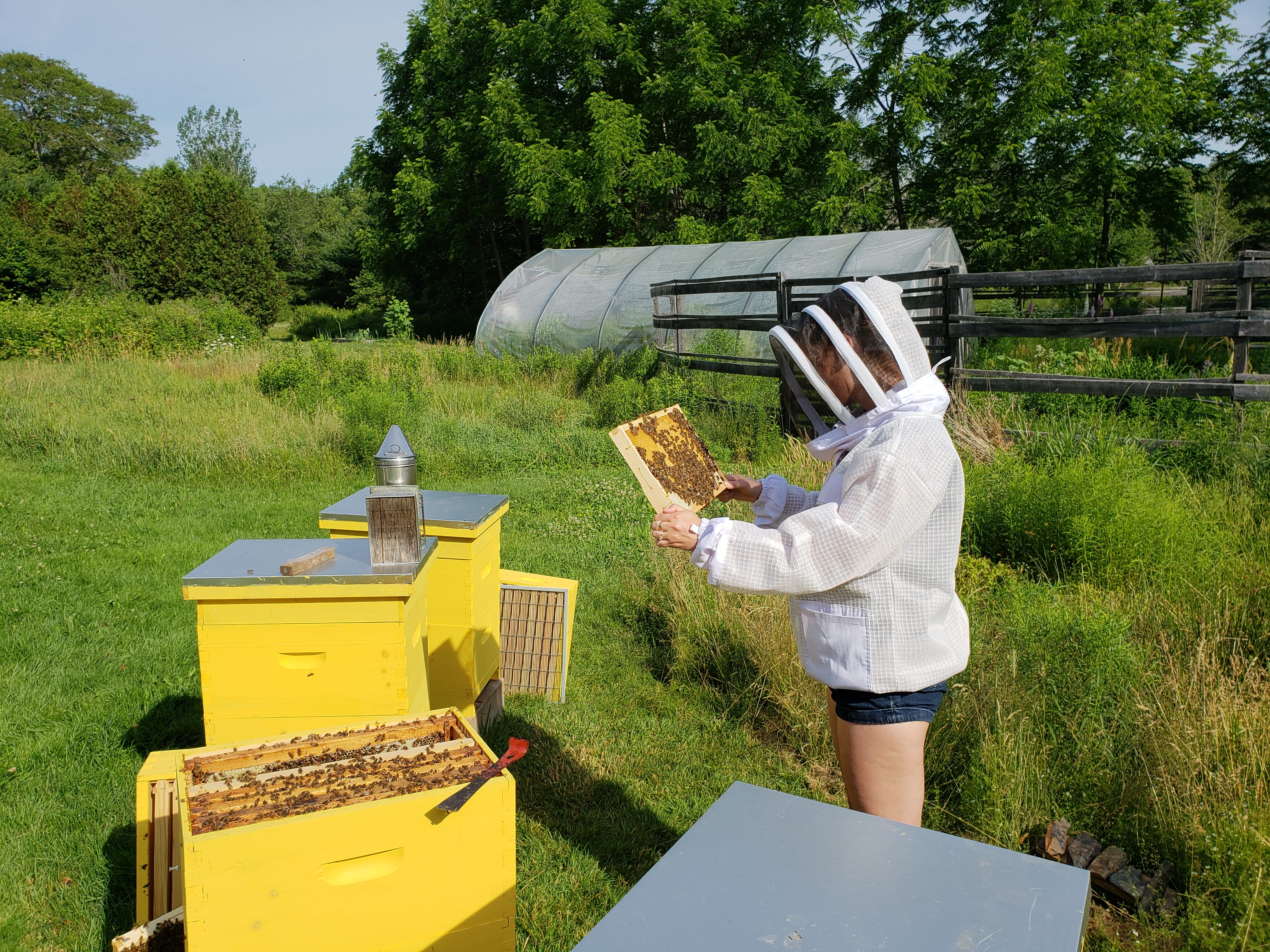
This encounter had been entirely by chance and fueled by my daily impulse to sit still by the hives and observe. I was fresh out of a massive global gathering with a network of network builders and desperate to get re-grounded and re-charged. I went to Windhorse Farm for quiet time alone, and left with lifelong teachers.
Years later, I would come to understand that the land itself and longtime stewards were on a learning journey with parallels to my own. After decades of tending to this rare old growth forest, the Drescher family modeled healing, reconciliation and rebalance with the rare act of returning this land to indigenous stewardship1.
In 2022, Windhorse Farm transformed into a place for indigenous learning, owned and led by Mi’kmaq people. They named this ancestral land Asitu’lisk2, meaning “that which gives you balance”.
Beyond the How
As I sought to deepen my knowledge and get some hands-on practice, I discovered how lucky I’d been to encounter bees face-to-face and receive teachings from an experienced practitioner early on.
Many beekeepers start with “the how” of keeping bees—the skills and knowledge needed to start a colony and keep it alive, the signs of health or stress to look for during an inspection, the equipment and timing to consider for taking and processing honey. These skills loom large within a beekeeper’s role, and each person will encounter these questions along the way as they develop their style. Folks educate themselves online with “how to” videos and podcasts that make the case for one approach. Virtual learning enables beekeepers to self-educate. It jumpstarts people into practice, with limited mentorship, biology, culture, or context.
These days I follow hundreds of beekeepers online. As someone who believes in the power of place, I take a close look at the practices and geography of each one. If I see someone feeding sugar or catching swarms at a certain time of year, I check the profile and date before determining whether the content is relevant to my climate, hive design, or the regenerative models of beekeeping I seek to practice. Beekeepers in Portland, Texas, Australia, Nepal, Turkey, and the UK bring immense value to the world and tell fascinating stories with their bees. And yet, they are no replacement for what I can learn directly from local bees. My organizing work in Baltimore taught me that context and culture carry immense power, and that practice follows purpose.
When I got the itch to build on my first observations, I knew I wanted to learn from bees themselves. I found plenty of virtual learning opportunities—even from our local university. I was willing to learn about commercial beekeeping if it meant I could get direct contact with bees. But paying for a certificate attained entirely at home, without ever touching a hive felt absurd and distant from my goals. After a volley of unsatisfying communications with the world of academia, I abandoned that path.
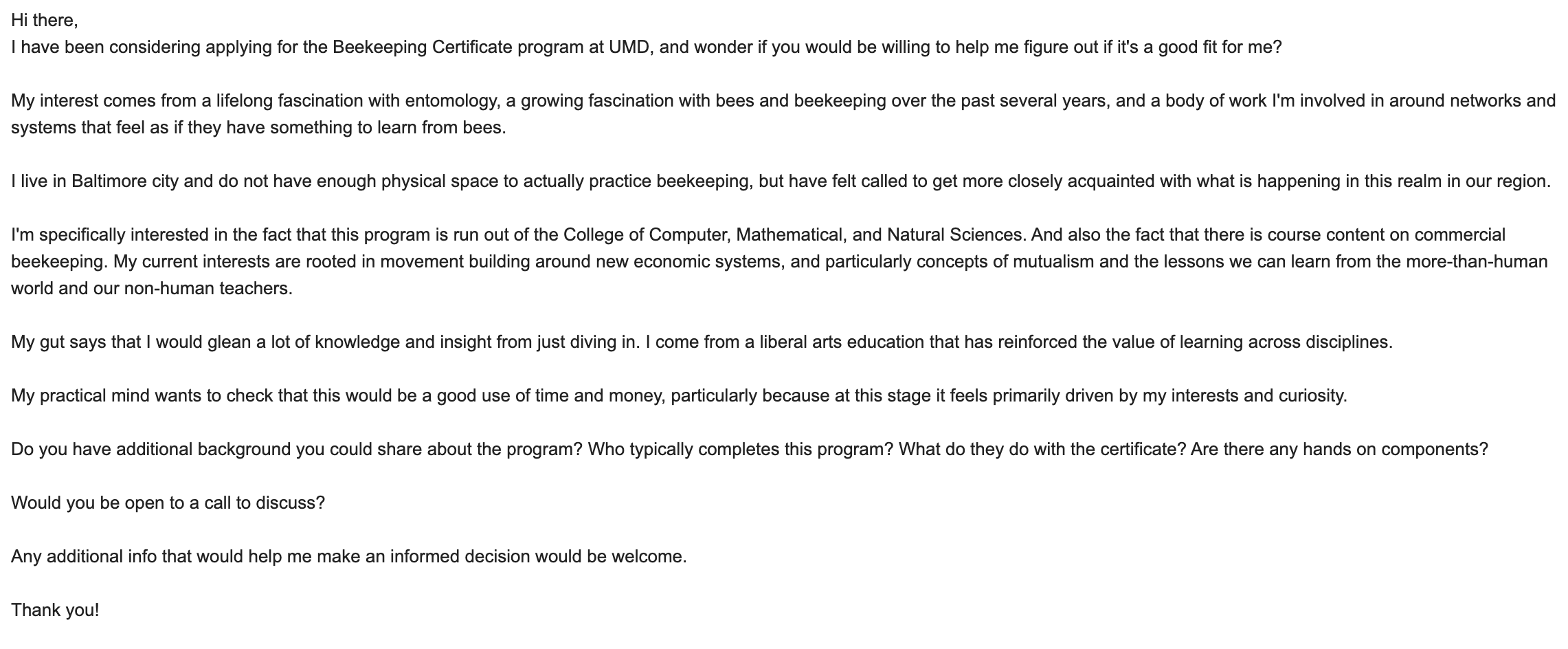

Giving up on the idea of a university certificate felt obvious once I learned all classes would be online and asynchronous. Nothing appeals to me less than learning in total isolation. I thrive on discussion, observation, and physical contact.
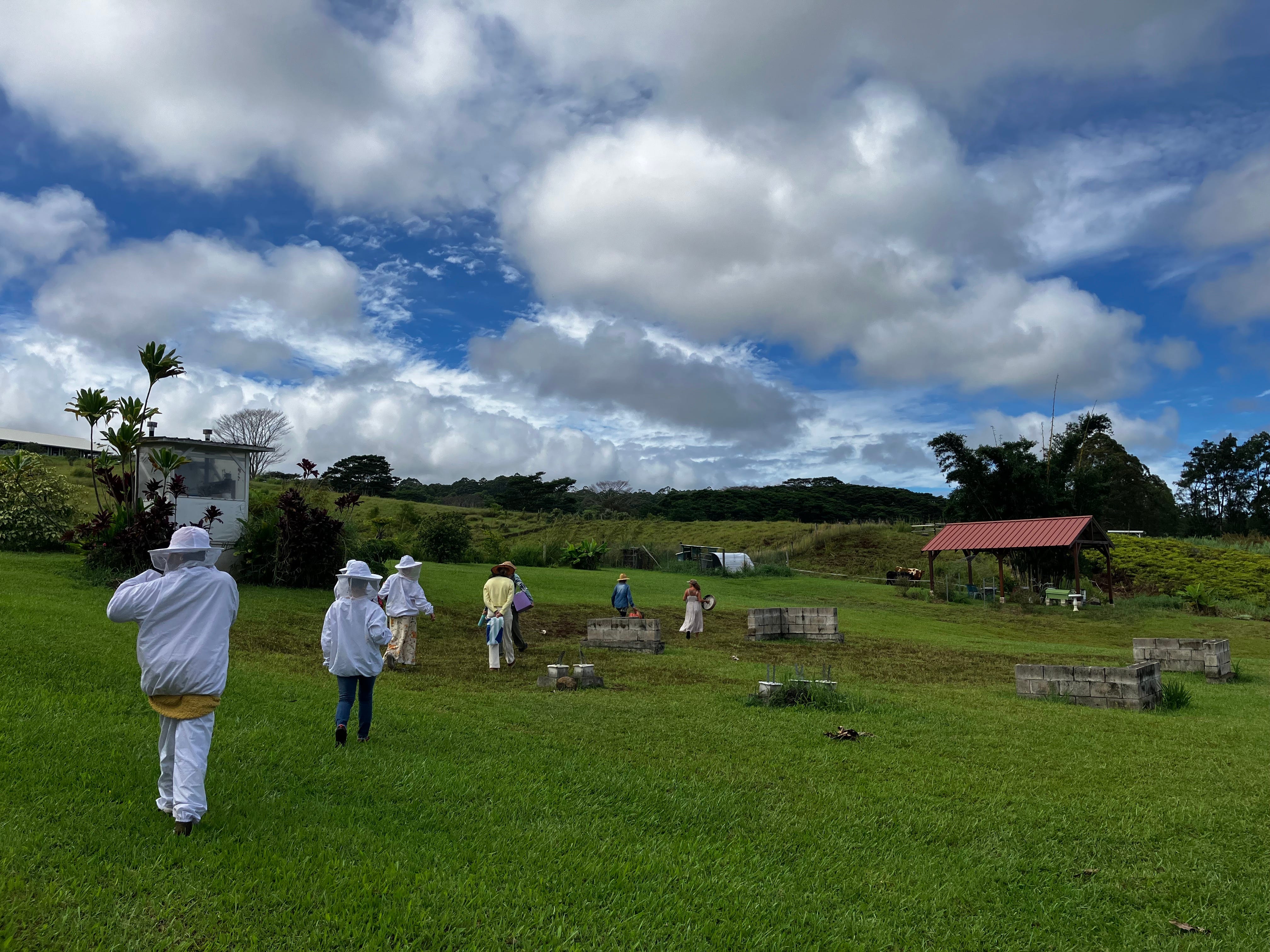
Determined to get my hands back into a hive, I Googled my way to the Wise Women Beekeepers on the Big Island of Hawaii and signed up for their second-ever women’s retreat in January 20243. Their website shared profiles of women beekeepers and healers who would guide us; referenced spiritual lineages of beekeeping; and showed women standing with reverence around the hive. From the moment I found this training, I understood we would delve into not only “the how” of beekeeping, but also “the why”.
Collective Transformation
I’m just back from my second training with the Wise Women Beekeepers, and still integrating the experiences & learning. A key feature of this “advanced course” is the approach to teaching.
This group of women—all organizers, learners, and teachers—embarked on a deep collective experience over 8 nights and 9 days. Much of the teaching was delivered through practice, ritual, and pilgrimage. We wove baskets, dyed veils, shared music, danced, told stories, honored artifacts, and made offerings to the land.
The women participating in this and past retreats are land stewards, storytellers, filmmakers, community builders, entrepreneurs, artists, builders, makers, and healers. They are people who connect to a sense of purpose, ignite collective memory, revive traditions, invoke ancestral wisdom, and forge new paths that can yield personal and collective transformation.
To operate in close community with these women and with the bees opens up conversations, deeper truths, and new ways of being.
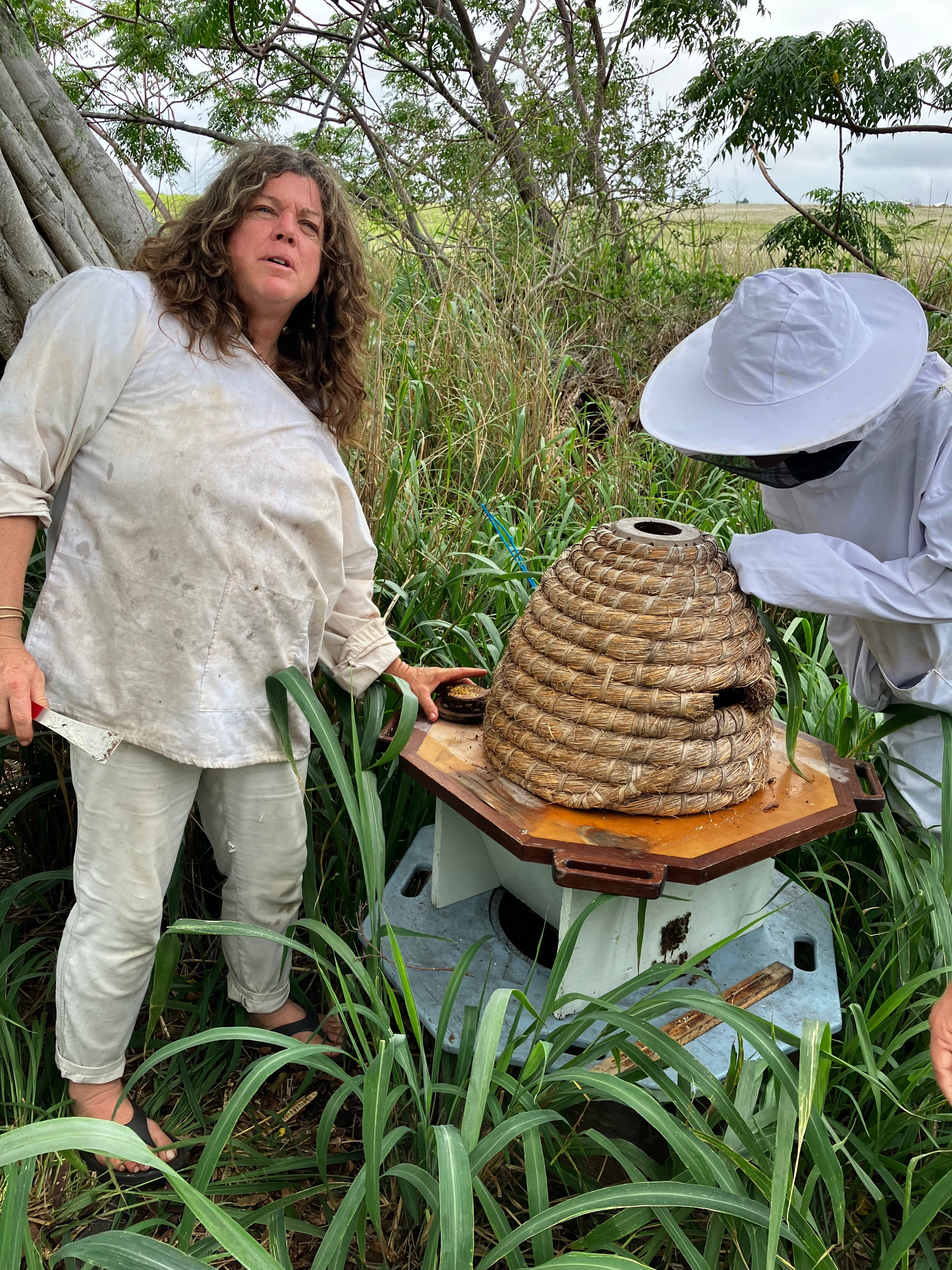
For this group, “the why” of beekeeping is rooted in experiences of spirituality and transformation around bees. They cultivate connection to the land and to powerful forces of nature. They connect people to cultural lineages and practices of care. Bees show up in our stories, songs, myths, and belief systems. And they offer up guidance and grounding to many who spend time with them.
This serves as the foundation of my “why” for beekeeping too. Because these same themes show up elsewhere in my life and work. In conversations—big and small, micro and macro—some common themes emerge as root causes that need attention in order for humanity to evolve towards its highest state of collective wellbeing. Many times, in many arenas, I’ve come to the conclusion that we must confront our relationships to land, lineage, stories, mindsets, medicine, and practices of care. These are urgent matters.
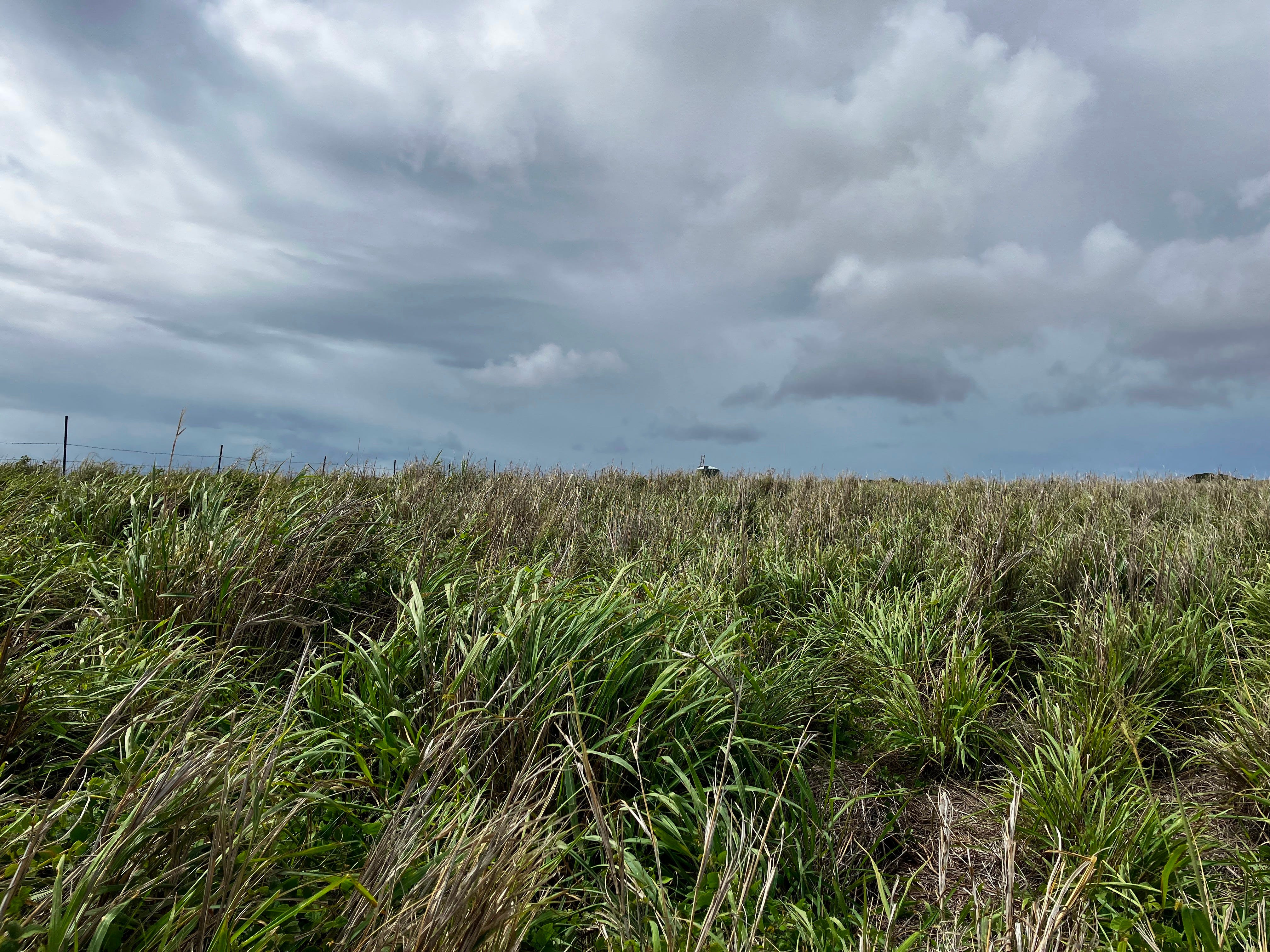
Bees offer a way into understanding the world from many angles. They allow beekeepers and guests to peer into their inner world. They carry on with their work as you gaze into the sweetness, magic, mystery, and darkness of their home. They fascinate our imagination and have a way of landing in the lives of the people who are meant to care for them—often alighting on a nearby tree.
To come into close proximity of those who tend bees with the aim to restore balance to this earth and its human stewards, is to understand that in so many ways—vast and small, historic and personal, direct and mysterious—bees teach us lessons we need to learn. They show up in unexpected places and teach us to see new things. They operate as a collective, modeling what it takes to thrive. They survive and co-evolve through many chapters of human evolution. And they have garnered admiration from temples and pyramids, goddesses and pharaohs, farmers and scientists for ages.
Even people who have kept bees for decades come alive with curiosity and wonder anytime the topic comes up. Many have become fierce and caring protectors of land, children, culture, and ecosystems that create the conditions for life to thrive.
Making Meaning
Over the last two weeks, it felt meaningful and much needed to get out of my head, into my body, onto the land, and immersed in new experiences and practices. We worked with bees nearly every day.
Our group helped to revive a struggling hive, deliver bees to new land, and harvest honey. We observed bees in wild places. We talked about policies and practices of spraying herbicides that rapidly decimate Hawaiian bee colonies. We compared notes on commercial practices and the pressures they put on bees and land.
There are no “right” or “wrong” ways of beekeeping. If you ask me.
There are ways of going about beekeeping that support states of abundance, thriving, and life. There are ways that rely on less intervention, more listening, and greater genetic diversity.
There are beekeeping methods that cause the bees to raise their volume and alarm signals, and ways that result in a lot more stings. There are people that interrupt natural biological processes at every stage. And there are industries and systems that keep bees and beekeeping operating at the brink of collapse. These are all teachers to us.
A focus on “the how” of beekeeping may teach you how to get through the winter, how to maximize honey production, or how to graft or inseminate queens to control reproductive processes. A focus on “the why” may give you the discernment to understand how to navigate these decisions when the time comes. And to see how your purpose and values align with the practices you choose.
“The how” may allow your bees to multiply.
“The why” may guide you through the rest of your days.
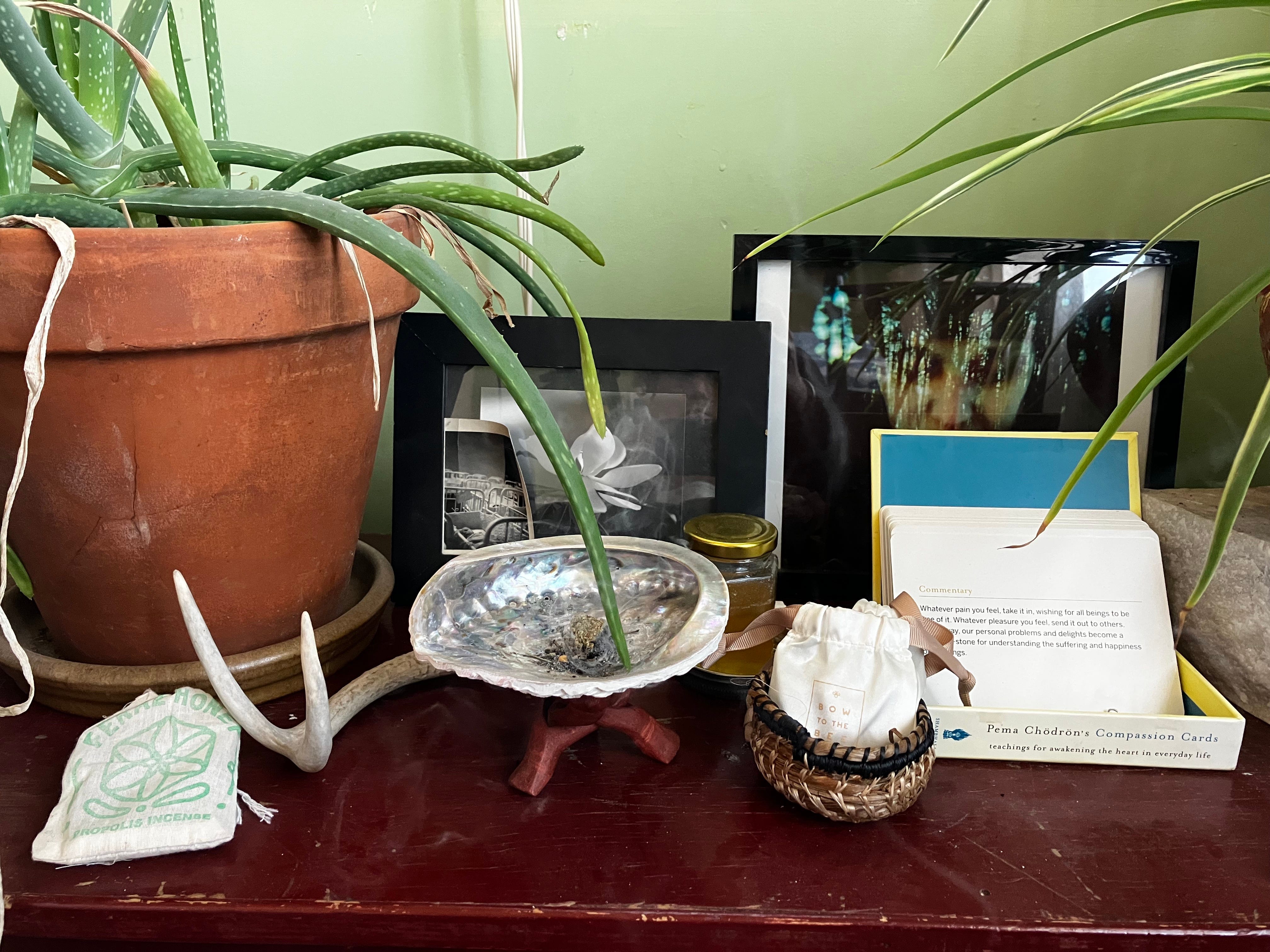
“Giving land back and other ways Canadians are making reconciliation personal: These settlers are going beyond orange shirts and land acknowledgments”, Sarah Treleaven, Nov 8 2022. Broadview. https://broadview.org/what-is-reconciliation/
Pronunciation: https://www.asitulsk.ca/wp-content/uploads/2022/12/asitulskPronunciation_two.mp3
Wise Women Beekeepers: https://www.wisewomenbeekeepers.com/
Thanks for writing this, it clarifies a lot. I'm trully intrigued by 'that which gives you balance.' How did the learning journey, specifically from the bees, evolve once the land transitioned to Mi'kmaq stewardship? Did the understanding of balance shift from personal to collective?